





18 Oct A Doctor Without Borders (RFQ 5:1)

A Doctor Without Borders
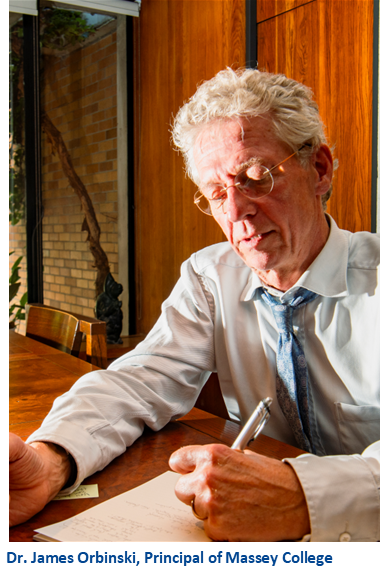 Dr. James Orbinski — who was there during the slaughter of the genocide against the Tutsi in Rwanda 1994, was on the ground in Africa as the AIDS crisis threatened to overwhelm the continent, coordinated Médecins Sans Frontiers responses in Afghanistan as the Taliban defeated Russian forces then tried to remake the country, provided emergency medical care to victims of the Twin Towers attacks in New York on 9/11, led research into treatments for Chagas Disease, Visceral leishmaniasis and other neglected tropical diseases of the Global South that corporate pharmacology wouldn’t address and contributes today to research into medical responses to the climate crisis — is not interested in displays of moral outrage or grand moral formulations that claim to address the roiling cascade of big problems the world faces.
“The idea that somehow there’s something as yet undiscovered… some principle, moral principle that is on the hill but it’s hidden behind a boulder, and all we have to do is just find it — and then suddenly, ‘Oh, now I get it!’ Well, not helpful,” Orbinski told Regis Friends Quarterly in his office at Massey College. “There’s no question that principles and values are very important. They ultimately can guide us. But as ideas, just floating around: not helpful.”
The Principal of Massey College, a Full Professor in the Department of Family and Community Medicine in the Temerty Faculty of Medicine, cross-appointed to the Munk School of Global Affairs and the Dalla Lana School of Public Health, and founder of the Dahdaleh Institute of Global Health Research, knows clear moral thinking matters. But moral thinking has to be applied to concrete reality, the doctor said.
“Moral values, without being rooted in the living reality of the problem — whatever that problem is that you’re trying to address — are almost vacuous, frankly,” said Orbinski. “And very deeply unhelpful to a person like me; and also alienating to people who are trying to engage in a critical, problem-solving approach to egregious injustice.”
The example par excellence is the AIDS crisis. In 2006 HIV and its effects threatened to infect first Africa and then the entire world. Thirty-six million people were infected and perhaps 400,000 had access to meaningful therapy in the form of antiretrovirals.
“The trajectory of the pandemic was very clear. It was on a massive upward, not incremental but exponential increase,” said Orbinski.
Twenty years later, AIDS is a managed and manageable global problem that exists very much on the back burner of our news cycle.
The axe didn’t fall because people banded together across borders in networks such as Caritas and the global NGO network that includes MSF to urge practical solutions. When that global, political campaign for access to essential medicines bore fruit in the production of generic medications in Brazil and India and President George Bush’s PEPFAR fund to get medically necessary therapies to poor people, things changed.
“It literally broke the back of the incident rate, the number of new cases… It also introduced the idea that access to medicines is not a privilege — it’s a right,” Orbinski said.
The doctor attributes some of his thinking about morality and big problems to a previous fellow of Massey College: scientist, educator and Holocaust survivor Ursula Franklin. Orbinski used to show up in her office weighed down by the global problems he was wrestling with.
“She would say, ‘James, we didn’t make this problem. We just work here.’ And then she would pause again, and she would say, ‘But it’s how we work and with what intention that matters.’”
As the Jesuits offer up a Doctor of Sacred Letters, Honoris Causa, on the Feast of Christ the King, Nov. 21, to a scientist, physician and global citizen, Orbinski stands as a man exhausted and exasperated by moral posturing and theorizing, but morally engaged in problems that overwhelm and bewilder most of us. He does it by seeing the world as it is and discovering what can be done.
“You can’t have practical solutions without a moral compass,” he said.