




18 Oct Global Theology (RFQ 5:1)

Global Theology
 For nearly five years now, Regis College has been academically federated with St. Michael’s College to form a single faculty of theology – Regis St. Michael’s (RSM). For 56 years, Regis College has been part of the Toronto School of Theology (TST), and via TST incorporated into the vast academic ecosystem we call the University of Toronto.
But even that is not the full extent of connections incorporated into life and study at Regis. Like a small cluster of synapses in your brain, or our solar system placed into a three-dimensional map of the galaxy, Regis College can’t be understood without accounting for all its connections – the systems, institutions, people and places that pass through Regis and into theological enquiry in service of the church. The 208 registered RSM students, eight tenured Regis professors, one emeritus professor and four sessional lecturers who occupy the building form an incomplete picture of the institution.
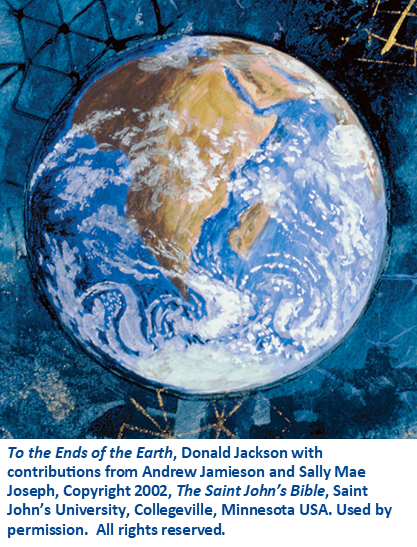
Regis College President Fr. Gordon Rixon, SJ, insists that Regis College is not local. It’s global.
“We’re growing in a very significant way, and Toronto as a centre of theology is really emerging,” he said. “We’re concluding the first five years of our federation with St. Mike’s. We have a growing enrollment. We have this recognition as being a global centre for Jesuit formation…. because of theological excellence.”
This isn’t just boosterism. RSM Dean of Theology Jaroslav Skira believes Regis and RSM have a vocation to be global.
“RSM is a microcosm of the global church,” he said in an email to RFQ. “Our student body includes a significant international presence. As well, RSM is situated in one of the most diverse cities in the world. Our students are therefore shaped by the many cultures, ecclesial communities and faith traditions of the Greater Toronto Area… Being at the global crossroads is thus central to who we are called to be.”
This year, Regis welcomes 17 new Jesuit theology students to a Jesuit learning community that already includes Africans, Latin Americans, Americans, Asians and Europeans. Within the global Jesuit order, Regis College has emerged as a critical link in forming Jesuits for a global church, Rixon said.
This isn’t multiculturalism as some sort of abstract, magic secret sauce – as if eating arrepas and phố on the same day somehow infuses the diner with a global perspective. The global character of study at RSM is found in concrete learning experiences, Skira said.
“The Collaborative Theology Initiative of the world’s Jesuit theology schools brings the world’s questions into our classrooms,” Skira said. “It also allows our research and ministry formation to contribute to the wider church.”
The Society of Jesus set up the Collaborative Theology Initiative in response to Pope Francis’s teaching on the role of theology in the church, particularly in Veritatis Gaudium – the 2017 update to the Vatican’s apostolic constitution on theology and seminary training. Veritatis Gaudium made intercultural learning the official, default setting for any study of theology in a Catholic context.
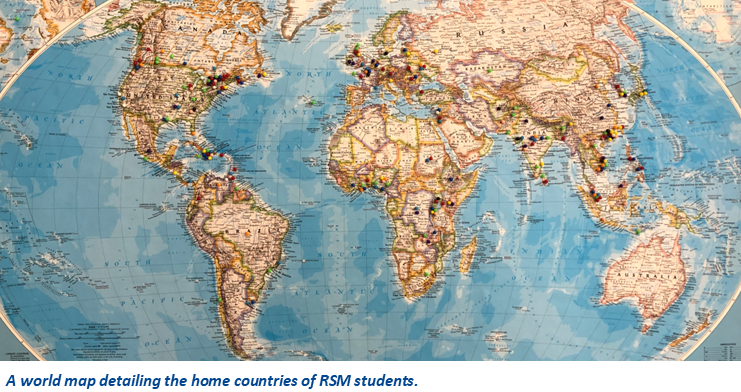
RSM creates and promotes global learning opportunities in places such as the Philippines, Rome and Africa, Skira said.
“We need to deepen our international partnerships through expanded student and faculty exchanges, and through collaborative teaching and research,” he said.
Skira confesses it will take more money to fully realize the dream. The funding that St. Michael’s and Regis College have secured from the Lilly Endowment for the Canadian Center for Catholic Pastoral Leadership and for the reconciliation-focused Walking in Service program for the theological formation of Indigenous leaders in the church enables the intercultural learning and research essential to theology at Regis.
Skira also points to RSM’s relationship with the Sheptytsky Institute, which has been “supporting scholars at risk in Ukraine” while that country remains under attack from Russia.
“RSM already has some financial supports in place to make this [global, intercultural study] possible,” Skira said. “And we continue to invite the generosity of our many benefactors to help us extend our global impact.”
Like Union Station where national rail networks, bus lines, subway lines and streetcars all meet, Regis College exists at the global crossroads of Catholic theology.